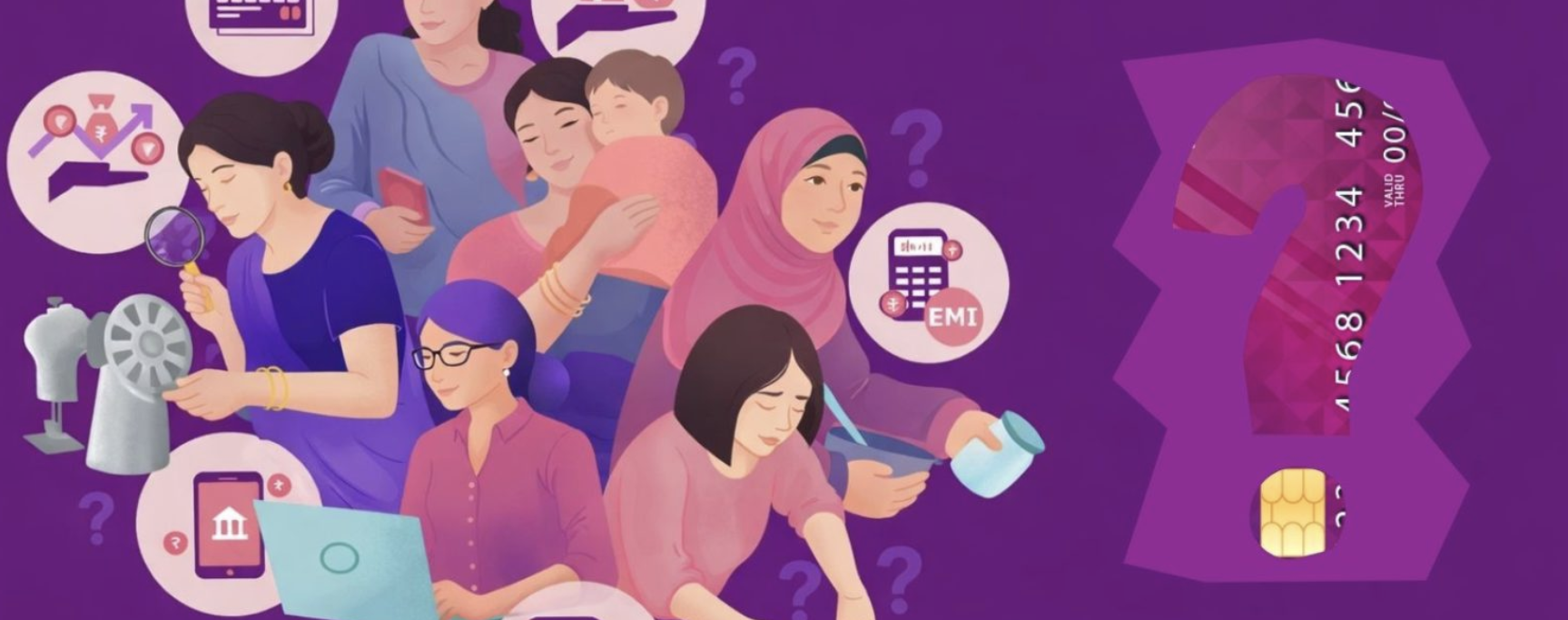
In Kyrgyzstan, taking out loans has become part of everyday life. Loans are increasingly seen as a way to meet various needs from purchasing basic food items to buying a car or starting a business. In 2024 alone, more than 1.1 million people took out loans, which is 51% higher than the previous year. At the same time, more than half of microcredit borrowers are women, and their number continues to grow each year. Given women’s relatively low participation in the labor force in Kyrgyzstan, as well as their comparatively lower wages, it remains unclear why they are becoming the most active group in accessing microcredit. Furthermore, the impact of loans on women’s economic well-being remains an open question.
According to research, microcredit in Kyrgyzstan began to emerge during the economic crisis that followed the collapse of the Soviet Union. As the newly independent country transitioned to a market economy, poverty levels increased and unemployment rose significantly. With the breakdown of previous social support mechanisms, people increasingly turned to informal sources of borrowing, primarily private individuals. These lenders often charged high interest rates, further worsening the population’s economic conditions. In this context, there was a growing need for more accessible and regulated financial instruments for low-income groups.
The first microfinance initiatives in Kyrgyzstan began to appear in the mid-1990s. One of the pioneers was the international organization FINCA, which launched early microfinance programs in the country. These initiatives were supported by international donors, including the World Bank, UNDP, the EBRD, and the Asian Development Bank.
At the initial stage, microcredit was primarily based on a poverty alleviation approach and targeted vulnerable groups. Loans were initially issued not to individuals but to groups. Over time, this system evolved into a more sustainable and commercial model of microfinance, combining social objectives with financial viability.
Another important milestone during this period was the adoption of relevant legislation regulating lending activities. In particular, the Law “On Credit Unions” was adopted in 1999, followed by the Law “On Microfinance Organizations” in 2002.
As a result, in the 2000s Kyrgyzstan became one of the leaders in microfinance development in Central Asia. Hundreds of microfinance institutions began operating across the country, reaching both urban and rural populations. Microcredit was especially directed toward supporting small and medium-sized enterprises, particularly in agriculture and trade.
Statistics show that the purpose of loans in Kyrgyzstan has undergone significant changes in recent years.
In 2000, loans directed to the agricultural sector accounted for 16% of total lending. By 2012, this figure had increased sharply to 63.6%. However, by 2024, it had declined again to just 11%.
A similar trend can be observed in the trade sector. In 2000, 70% of loans were allocated to trade and public catering, rising to 80% in 2003. By 2024, however, this share had dropped dramatically, with only 3.68% of total loans directed to trade.
In contrast, the share of consumer loans has increased sharply. While in the early 2000s consumer lending accounted for less than 1% of total loans, by 2024 it had reached 80.68%.
*Consumer loans are: loans taken by individuals to meet personal needs. Unlike business or production loans, they are typically used to cover everyday expenses such as purchasing food, paying for medical treatment, education, household appliances, or repaying existing debts.
Made with Flourish • Create a chart
It should be noted that as of 2026, nearly 100 microcredit and microfinance companies operate in the country. As of 2024, they were providing loans to the population at an average interest rate of 30.33%.In addition, more than 20 commercial banks provide financial services in the country. They are also actively expanding their microcredit offerings. As of 2023, the average interest rate on loans provided by banks was reported at 19.1%.
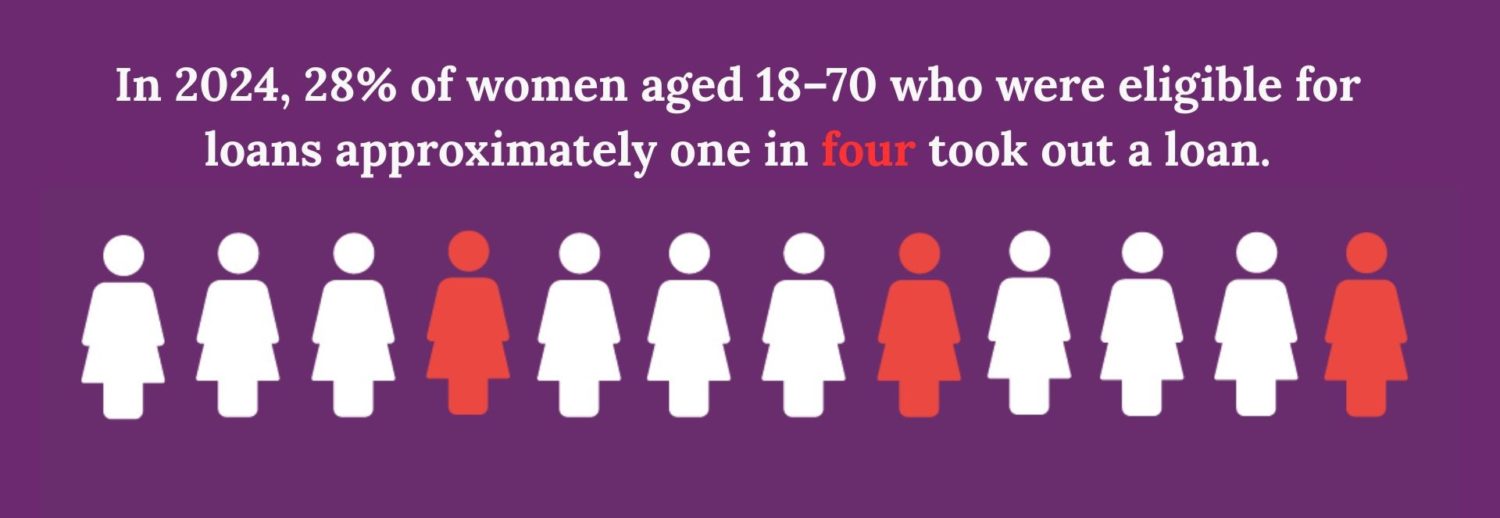
Throughout Kyrgyzstan’s post-independence history, women have consistently accounted for a large share of microcredit borrowers. In the early 2000s, nearly 80% of borrowers were women, largely due to the active involvement of international organizations such as the World Bank, UNDP, the EBRD, and the Asian Development Bank, which implemented programs aimed at reducing poverty among women.By 2024, this share had declined to 56% of all microcredit borrowers. Nevertheless, women continue to make up a larger proportion of microcredit recipients compared to men.
One of these women is Samara. She is now 52 years old. When microcredit first began to spread in Kyrgyzstan, she started taking loans together with other women in her village, as part of group lending schemes. She says that even today, she still has several outstanding loans. According to her, these loans were mainly taken to cover daily needs and support her children.
“In our village, many people migrate for work. But my husband stayed and worked locally. Later, when we faced financial difficulties and our household income declined, I joined other women and started taking loans. At that time, we didn’t borrow individually, we took loans in groups. We had to find people who would agree to act as guarantors for us. We used the loans for farming at home and to buy and sell livestock to repay them. Later, I found a job as a school cleaner, but even then, my salary was often not enough, so we continued taking loans. As my children grew up and moved away, they also began asking me to take out loans for them. I did so under my own name. In the end, we have been living with loans all this time.”
Economist Iskender Sharsheev notes that consumer loans taken to address short-term needs do not contribute to improving the population’s economic well-being.
“In general, credit is one of the key instruments of the economy. It helps distribute money across society, keeps it circulating, and stimulates economic activity. In other words, credit can be seen as the ‘lubricant’ of the economy. Without it, money circulation slows down and development is constrained. However, the impact of credit depends directly on how it is used. If loans are spent on consumption, temporary needs or everyday expenses they create an additional financial burden for households. In such cases, people may be forced to take new loans to repay old ones, falling into a cycle of debt. Some eventually fail to repay their debts, are placed on ‘blacklists,’ and lose access to future borrowing.”
At the same time, the expert emphasizes that credit fulfills its positive role only when it is used to start a business, develop production, or generate income. In such cases, it can contribute to economic growth and help households achieve stable sources of income.
Despite the high number of people taking out consumer loans in Kyrgyzstan, there are also cases where credit has been successfully used to develop businesses. One such example is Atyr. In 2010, she took out a loan to open a small shop, which she managed to grow and eventually used the income to purchase a home.
“Before taking out a loan, I worked in various positions in both the private and public sectors. The jobs were unstable, and there were times when I stayed at home without work. I realized that it would be better to start and run my own business. So in 2010, I took out my first loan and used it to open a shop. Of course, there were difficulties, but I only borrowed amounts that I was confident I could repay. I think this is very important. After taking a loan, you need to know how to use it and be able to repay it on time. Thanks to God, my business did well, and I was able to buy a house and get back on my feet. Even now, I still have loans.”
According to Atyr, one of the key factors to consider when taking a loan is having a stable source of income. However, this raises questions about how feasible this is for many women in Kyrgyzstan. Only 48.7% of working-age women are employed in the formal economy.
In addition, in recent years, the ratio of women’s wages to men’s earnings has declined.
Made with Flourish • Create a chart
Economist Iskender Sharsheev notes that the low participation of women in the labor force contributes to their financial dependence. According to him, a significant share of the work performed by women remains outside the formal economy and is therefore not properly valued.
“In reality, women do a great deal of work. However, much of it is informal and unpaid, taking place within the household. As a result, it is often perceived as a ‘duty’ and remains invisible. In such situations, women may become financially dependent on their families or spouses when it comes to repaying loans or covering other expenses. At the same time, it is important to note that even if women are not formally employed, they often play an active role in managing household budgets. This can provide them with a certain level of financial stability.”
At the same time, the expert emphasizes that financial literacy plays a key role in ensuring economic stability for both women and men in Kyrgyzstan. According to him, sustainable economic well-being can only be achieved when individuals understand how to balance income and expenses and use credit responsibly.
Alongside the importance of economic stability and financial literacy, there are cases where loans become a “last resort” for women. This was the reality for 32-year-old Aizat, who experienced domestic violence for years. When she realized that her husband could eventually kill her, she made the decision to escape. With no savings, taking out a loan became her only option.
“My husband and I lived together until we had five children. But throughout all those years, the violence never stopped, and in recent times it became even more severe. My children were also constantly afraid and emotionally exhausted… The last time he beat me badly, I realized that one day he might actually kill me. That’s when I made the decision to leave. I took my children and ran away. I knew we had to go to Bishkek, but I had no money. Then I remembered that I had previously taken out a loan for my father-in-law, so I decided to go to the bank. Because I had a credit history, they gave me 30,000 soms. That money was enough for travel and for our basic needs when we first arrived in Bishkek. Now, thank God, we have escaped the violence and started a new life with my children,” Aizat says
Entrepreneur and expert who has been working for many years on strengthening women’s economic empowerment, Makhabat Zhakeeva, notes that domestic violence remains a widespread issue in Kyrgyzstan, and economic dependency often exacerbates this problem. She emphasizes that one of the most effective ways to improve the situation is to promote financial literacy among women and support those who want to start their own businesses.
“I founded the public association ‘Development of Women’s Entrepreneurship’ in 2019 and have since been implementing projects aimed at improving women’s economic well-being. Based on my many years of experience, I have come to deeply understand the importance of women’s economic independence and have actively worked to promote it.
As we all know, domestic violence remains a serious issue in our country, particularly in rural areas. Although we do not always address this topic directly within our projects, we emphasize that economically empowered women are better protected from many negative situations.
In addition, we actively promote financial literacy among women. Whether in business or everyday life, the ability to analyze income and expenses and, for those engaged in business, to understand how to grow their activities, is extremely important. When a woman earns an income, it positively affects not only her own life but also her children and the overall atmosphere within the family,” she says.
According to the expert, women often have to take out loans in order to start a business. However, the effectiveness of these loans depends on how they are used.
“In Kyrgyzstan, women make up 51% of the population. We want to see more women integrated into the formal economy and their role becoming more visible. Many women remain in the informal sector, which means their work often goes unrecognized. At the same time, women are highly active across various sectors. For example, more than 80% of those working in the tourism sector are women. However, since many of them work informally, they are not fully reflected in official statistics. We are also working in this direction. It is important to note that many women are interested in entrepreneurship and want to start their own businesses, even on a small scale. However, even starting something simple such as selling baked goods or sweets requires initial capital. Since many women lack stable income or collateral, they often resort to loans. Loans can be a good opportunity if used properly. However, a lack of financial literacy can lead to negative outcomes. That is why we organize training programs and emphasize to donors and partners the importance of implementing systematic, long-term support in this area,” she explains.
Makhabat Zhakeeva also adds that strengthening education and support mechanisms is essential to ensure women’s economic stability.
“Women’s economic stability is critically important. Starting from 2025, a presidential decree has been adopted in Kyrgyzstan aimed at supporting women entrepreneurs. This can be considered one of the first initiatives in Central Asia that specifically focuses on women in business. Such measures will strengthen women’s role in the economy and increase their participation. In addition, it is necessary to provide continuous training, encourage education, and support women’s development in the business sector. When women are economically stable, it benefits not only them but also society and the state as a whole,” the expert concludes.
This material was produced as part of the 2025 Feminist Media Fund Fellowship of the Asia Pacific Forum on Women, Law and Development (APWLD).